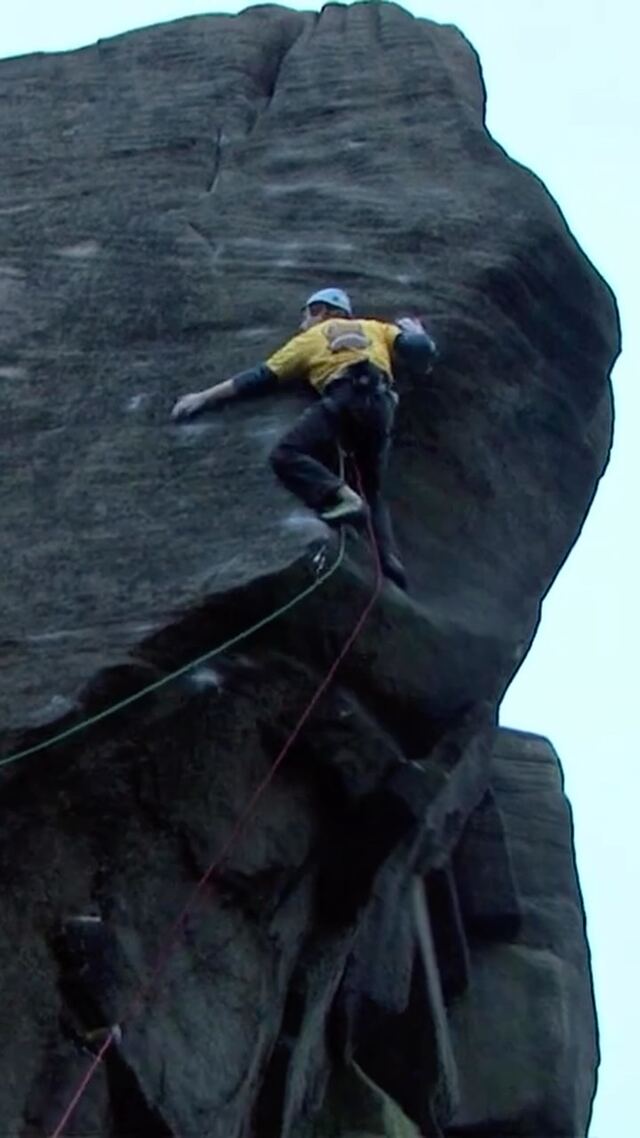
Watch a climber before a difficult attempt. Their eyes follow the holds. A hand moves through the air. They pause where the sequence becomes uncertain, then run through it again.
They are already practising part of the experience before leaving the ground.
Imagery uses mental rehearsal to recreate or explore an action, situation or response. Visualisation is one part of it, but the experience can also involve movement, effort, sound, touch and emotion.
The point is not to imagine a flawless result so vividly that it becomes inevitable. It is to make useful actions more familiar.
1Rehearse the action, not only the finish
A picture of yourself topping out can be motivating. It tells you very little about what to do at the difficult move.
Useful imagery becomes more specific. Where will you look? What will the foothold feel like? How will the movement unfold? What do you intend to do after establishing the next position?
Research suggests imagery practice can support some aspects of sporting performance, though effects vary and it is not equivalent to physical practice. Treat it as an addition to relevant training, not a replacement for strength, technical skill, feedback or safe judgement.
You still need to test the imagined solution in the real activity.
2Include the details that matter to you
Choose a short, manageable section rather than trying to rehearse an entire expedition in cinematic detail.
You might imagine looking out through your own eyes, or watching yourself from outside. One perspective may help you feel timing; another may help you understand the overall sequence. Try both and notice what is useful.
Include relevant sensations: the texture of the hold, the pressure through a foothold, the rhythm of running, or the sound of a clear instruction from a teammate.
Rehearse at something close to the pace of the action when timing matters. Slow a section down when you are deliberately trying to understand it, then reconnect it to the whole movement.
The exercise should clarify the task, not become a test of how vivid you can make the image.
3Practise a response to difficulty
A perfect imagined performance can leave out exactly what you most need to rehearse.
Include a manageable complication: a delayed start, a distracting thought, an opening move that feels harder than expected. Then practise the response you would like to use.
Perhaps you notice tension, return to your cue, reassess at an appropriate rest, or communicate a change of plan.
The important image is not simply the difficulty occurring. It is you responding in a realistic, workable way.
Avoid rehearsing impossible recoveries or pretending that genuine hazards can be managed through confidence alone. A useful scenario may end with stopping, seeking support or choosing another plan.
4Use imagery during performance to plan what comes next
Imagery is not only something to do before an event. It can also be useful in the natural pauses within a performance, when you need to understand how you are going to approach the next challenge.
At a rest, a climber might identify the next sequence and briefly picture the first few actions: where to place the foot, which hold to target and where the next decision point will be. Between boulder attempts, you might replay the failed move, adjust one detail and picture the revised attempt.
The aim is to turn information into a short plan: What is the next problem? What response do I want? What would make me change the plan? This gives you a clear first step without trying to rehearse everything at once.
Use this only in genuine pauses where it is safe to direct attention inward. Do not visualise while you need to be belaying, navigating traffic, monitoring objective hazards or carrying out another safety-critical task.
5Make it a brief, repeatable practice
Start somewhere physically safe. Rehearse one movement or situation briefly, then perform the real task when appropriate and compare it with what you imagined.
What was accurate? What did you miss? Update the rehearsal. Over time, imagery becomes less about a perfect mental film and more about making good decisions before action.
Some people find visual images difficult to produce. You can describe the sequence in words, focus on movement sensations, or use a demonstration as a starting point. A vivid picture is not a prerequisite for planning your actions.
If imagery becomes distressing or repeatedly pulls you into difficult memories, stop and seek appropriate support rather than forcing the exercise. The most useful rehearsal stays connected to reality: what you know, what you are learning, and how you want to respond when the moment arrives.