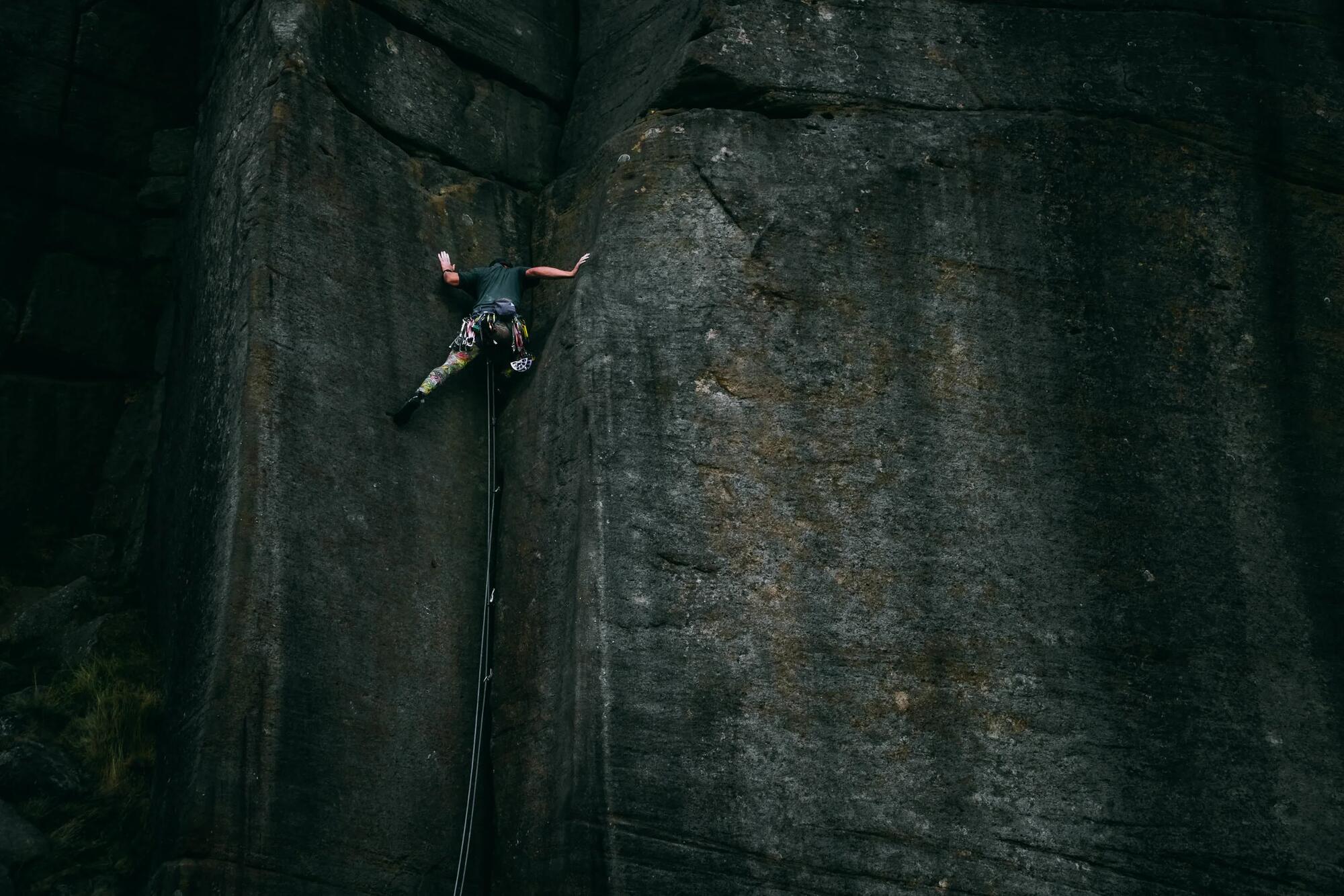

You can do the movement in training. You have repeated it, refined it, and used it successfully before.
Then the moment becomes important. People are watching. The result matters. Suddenly, the familiar action feels awkward and uncertain.
You try to take control. Think about the hand. Check the foot. Make absolutely sure the timing is right.
The harder you supervise, the less natural it feels.
This is one way choking under pressure can unfold: a marked drop in performance when the athlete has the relevant ability, but struggles to access it in the moment.
1Don't call every mistake a choke
A difficult route can defeat you because it is difficult. Fatigue, injury, conditions, unfamiliarity or inadequate preparation can all affect performance.
One missed move does not establish a pressure-related problem. Nor does feeling nervous mean you are about to choke.
Look for a pattern: does a relatively familiar, well-practised skill become significantly less reliable when the stakes rise? What changes in your attention, thoughts and behaviour at that point?
The purpose is to understand the difficulty, not give yourself a new identity as "someone who chokes".
2Understand two ways attention can be disrupted
One explanation is explicit monitoring. Under pressure, you begin consciously supervising parts of a skill that usually run with less deliberate control. Instead of allowing the movement to unfold, you try to manage it step by step. Experimental work with skilled putting supports this as one mechanism of choking.
Another is distraction. Worry about consequences, judgement or previous errors competes with the attention needed for the task. You may still be trying very hard, but part of that effort is going somewhere else.
These are not identical processes, and they need not explain every case. Sometimes you are giving too much attention to the mechanics. Sometimes too little remains for the information that matters.
"Just stop thinking" is therefore not a very useful instruction. You need to know what to return to.
3Build a reset that fits the activity
Where there is a safe opportunity to pause, simplify.
Acknowledge what is happening: "I've started monitoring every detail" or "I'm caught up in the result." Allow a comfortable breath, identify one relevant cue, and return to the next action.
For one athlete, the cue might be the intended target. For another, it may be a familiar rhythm or a short word already practised in training. Test these approaches rather than assuming one cue works for everyone.
Keep detailed technical analysis for an appropriate break. That does not mean ignoring new information, pain or a safety concern. In climbing and other consequential activities, stopping or reassessing may be the correct response.
A reset should improve access to judgement and skill, not encourage blind commitment.
4Train for pressure without making training threatening
Practise your routine and attentional cues before the important event. Then introduce manageable, relevant pressure: a willing observer, a scored attempt, or a simulation of the event's structure.
Agree the purpose and boundaries. Humiliation, dangerous consequences and punishment are not necessary ingredients.
Afterwards, review the process. What changed when the pressure rose? Did you rush, overanalyse, withdraw, or forget the plan? What helped you re-engage?
Look beyond the performance as well. When a result carries your entire sense of worth, there is a great deal riding on every attempt. The values, relationships and wider identity explored elsewhere in this series can help put the result back into a larger life.
None of this makes someone choke-proof. It builds options: preparation you can trust, a response you have rehearsed, and a way to learn from a difficult moment without treating it as proof of personal failure.